
Is a US Grad Degree Worth it For Me?
My journey: Penn Huntsman → forced to leave America → Stanford → O1 visa. Here's my $500K lesson for international students
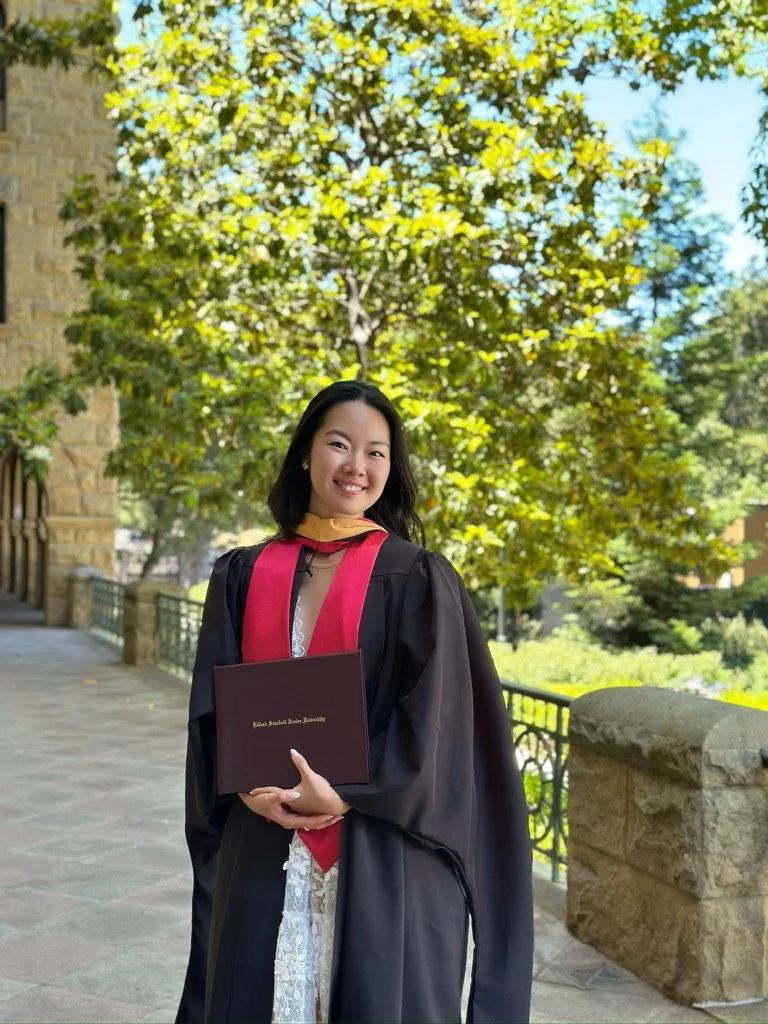
Hi, I’m Angela! I’m an entrepreneurship instructor at Stanford, O1 visa holder, and career / admissions coach with a 90% success rate helping international students navigate top US grad school applications strategically.
about this guide
Most guides tell you how to get in. This guide helps you decide if you should even apply. I've seen too many brilliant Stanford graduates stuck in toxic jobs because of visa sponsorship, or unemployed for a year while desperately searching for sponsorship. This guide covers what nobody talks about: the visa reality, the hidden costs, the emotional toll, and whether alternatives might be smarter for YOUR situation.
The guide is structured in 6 sections. Answer each honestly to assess whether you should apply to American grad degree programs.
Question 1: can I actually stay and work in America? → The visa reality: H1B odds, STEM designation, treaty visas, O1 pathway
Question 2: can I actually afford this? → Real costs: Healthcare shocks, hidden expenses, my $0 debt strategy
Question 3: can I handle the emotional reality? → Distance from family, visa hostage situations, mental health costs
Question 4: will this degree actually help my career? → Recruiting timelines, which industries sponsor, ROI calculations
Question 5: what’s my actual financial return on investment? —> Income, taxes, student debt, oh my
Bonus Question: have I considered alternatives? → When Canada/UK/home country might be smarter choices
You can either start reading from the beginning or jump to each section according to your needs!
want to talk through whether US grad school is right for you?
Hi, I'm Angela. Currently, I'm an entrepreneurship instructor at Stanford and an edtech studio operator based in the US on an O1 Visa. I went through my fair share of ups and downs personally and professionally while completing my grad degree at Stanford: from 3Xing my compensation, making amazing friends, and being inspired every day in Silicon Valley to losing loved ones, navigating unexpected medical challenges, and experiencing the power dynamics that come with visa dependency.
A couple weeks ago, I hosted an event on Leland discussing whether me and several other panelists were still happy with our decision to attend graduate school in the states – aka if a US graduate degree is still worth it. Reflecting on what we said during the event, I decided to write this guide for anyone considering a graduate degree in the US.
If you missed my event, you can watch a recording here.
My journey: Penn Huntsman undergrad (50 admits/year) → left America after graduation due to visa issues → returned to Canada for Deloitte → Stanford (25 admits/year) → saved by TN visa → now O1.
Here’s my $500K lesson about US degrees that every aspiring international student needs to hear. Read through the questions below and answer honestly. Doing so will help you find clarity even as we experience political and economic turmoil right now!
Is a US Grad Degree Worth it For Me?
question 1 — can I actually stay and work in America after graduation?
-
Disclaimer: This is for educational awareness only - always consult an immigration attorney for your specific situation.
The harsh truth about US education starts with visa realities that affect everything else. The H1B lottery currently sees 450,000-500,000 applications competing for just 85,000 spots, giving you roughly 13-16% odds regardless of your school's prestige (USCIS). A computer science graduate from MIT faces the same lottery as everyone else, although a US master's degree does give you two chances in the lottery. While cap-exempt employers like universities and research organizations exist, these positions are limited and highly competitive.
The STEM designation of your degree program is perhaps the most critical decision you'll make. Every degree gets 12 months of OPT (Optional Practical Training), but STEM-designated programs receive an additional 24-month extension, giving you 36 months total to work and potentially multiple H1B lottery attempts. The distinction isn't always obvious – Economics typically doesn't qualify as STEM, but Financial Engineering does. I learned this the hard way when my Penn Huntsman international studies degree didn't qualify, ultimately forcing me to leave the US despite having a job offer lined up…
As of 2025, we're seeing unprecedented political uncertainty around H1B visas and immigration policy, with changes happening rapidly and unpredictably. What seemed like a stable visa pathway just months ago can shift dramatically with each election cycle and policy announcement. The stakes are higher, the risks are greater, and the need for clear-eyed decision-making has never been more critical. If it applies, I strongly encourage you to consider alternative visa pathways, specifically treaty visa status and O1 visas.
Treaty Visas
Treaty advantages can be game-changers if you have the right citizenship. Canadian and Mexican citizens can access TN visas for specific professional occupations (engineers, scientists, management consultants, etc.) without a lottery. My Canadian citizenship saved my US career through TN status after my OPT expired.
Australians have access to E3 visas (similar to H1B but with a separate, less competitive pool). Singaporeans and Chileans can use H1B1 visas with their own allocation. If you hold any of these citizenships, your odds improve dramatically and hiring managers may be more likely to extend an offer if they see a pathway for you to remain with the company long term.
O1 Visa
The O1 visa offers an alternative path for those with "extraordinary ability." This typically requires published research, conference presentations, press coverage, patents, or significant awards. Think: 3+ published papers during your PhD, 2+ patents, or notable industry recognition. However, building this portfolio usually takes 2-3 years post-graduation, so it's not an immediate solution.
My own path from F1 to O1 wasn't straightforward. While finishing up Stanford, I strategically thought through which fellowships, industry exposure, and networks I should develop to build my "extraordinary ability" case. I joined relevant organizations, focused on innovation and publishing, and methodically built my O1 portfolio. But life doesn't follow a perfect timeline – unexpected challenges along the way forced me to switch to TN visa status as a backup while I continued building my case.
I eventually secured my O1 earlier this year, but it took longer than planned. Learn from me & please budget generously for time: time to prepare evidence of your extraordinary ability, time to join new organizations and build credibility, time to innovate and publish – and crucially, extra buffer time to actually receive your O1 approval, just in case something unexpected comes up. The O1 path is possible, but it requires strategic planning, patience, and realistic timelines.
Also, choose an AMAZING O1 immigration attorney. My attorney was not only diligent, detail-oriented, and incredibly knowledgeable, but he and his entire team truly listened to my challenges and reservations, and helped me to position myself and my future work in an incredibly aligned way that opened up a multitude of possibilities. If you are a startup founder and hoping to apply for an O1, message me and I'm happy to connect you with my attorney!
-
Is my intended program STEM-designated?
Do I have citizenship from a treaty country (Canada, Mexico, Australia, Singapore, Chile)?
Am I willing to bet on 13-16% lottery odds?
What's my backup plan if I can't stay?
-
Choose STEM-designated programs when possible (check the official STEM list)
Target industries that heavily sponsor: tech, consulting, finance
Research cap-exempt employers (universities, non-profits, research organizations)
Consider schools in immigration-friendly cities with strong legal support networks
If you have treaty citizenship, understand how to leverage it strategically
Build an O1 portfolio starting now – publish, present, patent, win awards → proof from your home country works too! – and partner with an incredible immigration attorney

😰 navigating visa complexity? let me share what I learned
The visa landscape is complex and constantly changing. I've been through the F1 → had to leave → TN → O1 journey myself. I can share my experience choosing programs, building an O1 portfolio, and creating backup plans when things didn't go as expected.
What we can talk through: How I evaluated STEM vs. non-STEM implications (and what I wish I knew) | How I built my O1 case while at Stanford | My experience with TN visa as a backup | Thought processes for creating contingency plan
Note — I am not an immigration attorney! Just sharing what has worked for me
question 2 — can I actually afford this?
-
The sticker price is just the beginning. Tuition for 2-year graduate programs ranges from $60,000-$170,000+ total. Living expenses vary dramatically by location: expect $20,000-$40,000 per year in cities like San Francisco or New York, versus $12,000-$20,000 in college towns. But these visible costs are only part of the story.
The healthcare shock: Mandatory international student insurance typically costs $2,000-$8,000+ per year, but that's just your baseline. American healthcare operates on a system most international students find baffling and incredibly expensive. You'll have copays (paying $30-$50+ every time you see a doctor even with insurance), deductibles (paying thousands out of pocket before insurance kicks in), and out-of-network surprises. A single emergency room visit can cost $3,000+ even with insurance. Prescription medications can be 10x more expensive than in your home country. I've seen students avoid seeking medical care because they couldn't afford the copays, leading to worse health outcomes.
The healthcare reality hit me harder than I ever imagined. During my first year at Stanford, I accidentally broke a tooth and needed emergency dental surgery. Even with the comprehensive dental insurance purchased through Stanford – a brand-name school that I assumed would have excellent coverage – I was left with thousands of dollars in out-of-pocket costs.
Coming from Canada where healthcare is always covered, I simply didn't budget for such a massive medical expense. I had great insurance at Deloitte before grad school, so I naively assumed Stanford's insurance would be similarly robust… Fortunately, I could tap into Stanford’s emergency fund to cover it, but many students don't have that safety net. Looking back, I should have done thorough due diligence on what exactly was and wasn't covered, read the fine print on deductibles and coverage limits, and budgeted sufficiently before arriving at Stanford.
Don't make my mistake. The American healthcare system is designed differently than what most international students are used to, and even "good" insurance from prestigious institutions can leave you with devastating surprise bills.
Travel emergencies: When (not if) a family emergency happens, last-minute international flights can cost $2,000-$5,000+. If you need to leave mid-semester, you might face visa complications for re-entry. Document authentication, visa reappointment delays, and urgent family situations create both financial and emotional strain. Budget for at least one emergency trip home per year.
Hidden costs compound quickly: moving expenses and shipping belongings internationally, furniture for your apartment, winter clothing if coming from a warm climate, US phone plans, application fees and test prep costs before you even arrive. The total all-in cost for a 2-year graduate program? Realistically $150,000-$300,000+ depending on your program and location.
-
Can me/my family afford this without crippling debt?
What happens if I have a medical emergency? Does my school have an emergency fund?
Can I afford to fly home if there's a family crisis? If not, how will I handle the emotions that come with my decision?
Am I comfortable with this level of financial risk?
-
Start planning 18-24 months early for maximum scholarship opportunities
Apply to schools with strong merit aid for international students (research average aid amounts) and negotiate financial aid packages – yes, even for grad school. Have competing offers to leverage
Research home country government scholarships (Fulbright, country-specific programs like Chevening) or seek employer sponsorship from home country companies – note that you’ll likely need to return to your home country for at least 1-2 years as many sponsor you on a J1 visa
Consider public universities with lower tuition for certain programs
If you’re research oriented, look for PhD programs with full funding
Budget for healthcare – consider supplemental international student insurance riders

💰 want to hear how I graduated with $0 debt?
I learned the hard way about budgeting for California costs. Let me share how I found RA/TA positions, what I wish I'd known about Stanford's emergency fund, and how I planned my finances.
What we can talk through: My approach to finding funded positions at Stanford | How I thought through the real cost of living in different cities | My framework for deciding what financial risks I was comfortable with
Note: I’m not a financial advisor, just sharing what worked for me!
question 3 — can I handle the emotional reality of being an international student?
-
The emotional toll of being an international student is something nobody prepares you for. While at Stanford, I dealt with several painful personal firsts: losing a grandparent while unable to easily fly home, ending a significant yet toxic relationship without my usual support system nearby, feeling isolated from my cohort, and becoming increasingly distanced from my friends back home who were moving on with their lives. Once I graduated and found what seemed like an amazing job, my boss constantly referenced my visa status in performance conversations – a power dynamic that left me feeling trapped and vulnerable.
I'm fortunate in many ways: I had access to therapy through previous employer benefits and came armed with an arsenal of self-regulation tactics. My family was also incredibly understanding and supportive, and I eventually found amazing, inspirational, caring, and just all-around wonderful friends at Stanford. But it was a really rough patch until I got there, enduring months of struggling alone while dealing with grief, heartbreak, and isolation.
Let's talk about the hidden human costs that nobody mentions when you're away from family and your support networks for an extended time as an international student and then as a worker on F1 OPT or H1B. The visa uncertainty compounds every personal challenge, turning normal life difficulties into potential crises that threaten your ability to stay in the country.
Distance from family during crises: You can't easily fly home for weddings, funerals, or when relatives become seriously ill. Visa complications might make mid-program travel risky. Time zone differences mean you're disconnected from daily life back home, missing birthdays, celebrations, and ordinary moments that build relationships. You'll experience major life events through video calls and feel the guilt of not being physically present.
Relationship challenges: Long-distance relationships face immense strain under the pressure of uncertainty and years of separation. Friends back home move on with their lives - they're getting married, having children, building careers, while you're in a different world. Dating in the US comes with cultural complications and the awkwardness of visa status affecting relationship decisions. How do you plan a future with someone when you might have to leave the country?
Cultural isolation and identity strain: Navigating American workplace norms, subtle (and not-so-subtle) discrimination, constantly explaining your background and culture. The exhaustion of code-switching between your authentic self and what's expected in American academic and professional settings takes a toll you don't anticipate.
The visa hostage situation: This is the reality nobody warns you about. Once an employer sponsors your H1B, your leverage disappears. Toxic boss? You can't easily quit without losing your visa status. Passed over for promotion? Your options are limited unless you recruit outside. Layoff during a downturn? You have 60 days to find new sponsorship or leave the country. Your employer knows this power dynamic, and whether they exploit it or not, you feel the constraint constantly. You make career decisions based on visa security rather than growth, happiness, or compensation. Recognizing that I wanted to have agency and avoid future situations where my ability to stay in a country that I have put down roots, built real friendships, and why I decided to pursue no one.
Recognizing that I wanted agency over my own future – and to avoid situations where my ability to stay in a country where I'd put down roots, built real friendships, and created a life depended on a single employer's decision – is exactly why I decided to pursue the O1. I refused to let my career, my relationships, and my sense of home be constrained by visa dependency.
The O1 path is harder and took me a year of strategic planning and another year of execution, but it gave me control. You're not tied to one employer. You can negotiate freely, change jobs when needed, explore entrepreneurship, and make decisions based on what's best for your life – not just what keeps you legal. For me, that freedom was worth every hour spent building my portfolio, every networking event, every publication, and every setback along the way. But not everyone can or should pursue the O1, which is why understanding all your options (including whether a US degree is even right for you) matters so much.
Constant uncertainty: You live your life in 1-3 year visa chunks, unable to plan long-term. Should you buy furniture or stay mobile? Can you commit to a mortgage or to a person? What about starting a family? Immigration policy changes with each election cycle, and you're constantly recalculating your options. The mental load of always having a Plan B, Plan C, and exit strategy is exhausting. I struggled around critical immigration moments – finding internships and my post-grad job, negotiating visa sponsorship, waiting for approval notices. I didn't even fully decorate my apartment until I re-entered the country on my O1 despite spending almost four years in America. I kept telling myself "once I have more certainty," but that moment kept getting pushed further away.
Living in limbo becomes your new normal, and you don't realize how much mental energy it consumes until you finally have some stability. If you're someone who needs to plan ahead, make big life decisions with confidence, or struggles with prolonged uncertainty, factor this heavily into your decision. Some people thrive despite the ambiguity; others find it slowly drains them.
Mental health support barriers: Therapy and mental healthcare are expensive even with insurance (expect $100-200+ per session) and finding providers who understand your cultural context or speak your language is difficult. Many international students suffer in silence because they don't know how to access support or can't afford it.
Pressure from family investment: You carry the weight of family sacrifices that funded your education. There's immense pressure to "make it work" even when you're miserable. Guilt about struggling when your family has invested so much. The fear of admitting failure or that you want to come home. This pressure can keep you trapped in situations that are harmful to your wellbeing.
-
Can I handle years away from family during important moments?
How do I cope with stress and isolation?
Do I have strong emotional resilience and independence?
What's my support system in the US?
Can I handle constant visa uncertainty affecting my life decisions?
Am I prepared to potentially be "stuck" in a job due to visa sponsorship?
How will my relationships and dating life be affected?
What happens to my mental health when I'm isolated and under pressure?
-
Choose schools with strong, active international student communities and consider cities with large diaspora communities from your home country
Join cultural and affinity groups immediately upon arrival – don't wait to "settle in". In fact, connect with alumni from your country before arriving to build instant community
Research mental health resources BEFORE enrolling (insurance coverage, language options, cultural competency)
Be honest with family about the emotional reality and set expectations early and build a financial buffer for emergency trips home (aim for a $3,000-5,000 emergency fund). Also budget for regular trips home (at least annually, more if possible)
Screen potential employers for international employee support during recruiting
Build multiple sponsor relationships, not dependency on a single employer, and have clear exit plan criteria – at what point would you return home vs. push through?

💭 let's have an honest conversation
I spent months struggling with isolation, visa anxiety, and distance from family. I eventually found my way, but I wish someone had helped me think through what I was really getting into.
What we can talk through: Your specific situation and what matters most to you | How I built my support systems (and looking back what I would do differently) | When I questioned my decision to attend Stanford and how I worked through it
question 4 — will this degree actually help my career?
-
Employment rates vary wildly by school tier, program, and major. A top-10 MBA program might have 95%+ placement within 3 months, while a mid-tier program in the same field might see 70-80%. For international students, these numbers are often lower because visa sponsorship requirements eliminate many employers from consideration.
Certain industries actively sponsor international employees: big tech, consulting firms, investment banks, healthcare organizations, and academic institutions. Others rarely or never sponsor: government positions, defense contractors, many local businesses, most non-profits, and roles requiring security clearances. Your career goals must align with sponsor-friendly industries, or your degree becomes much riskier. In 2025, even previously sponsor-friendly industries are pulling back on their commitments amid economic uncertainty and policy shifts – tread lightly and have contingencies!
Geographic clustering matters enormously. You cannot access tech jobs from a rural program with no industry connections. Finance recruiting happens primarily from schools in or near New York. Consulting firms focus on specific target schools. The location of your program determines which industries and companies you can realistically access, regardless of your qualifications.
Network value also differs dramatically between schools. An MBA from a top-7 program opens doors at every major company and provides a lifelong global network. A degree from a regional school provides a strong local network but limited national or international reach. Both can lead to successful careers, but they're different products with different ROI profiles.
Understanding Recruiting Timelines & The Pre-Grad Internship Strategy
Recruiting timelines favor those who understand the system and many international students learn this too late. Many industries recruit 6-12 months before graduation, and internship recruiting happens almost immediately after starting your program. If you don't know this and miss the recruiting cycle, you might graduate without job prospects despite having a great degree. Industry connections and recruiting preparation matter as much as classroom education.
I wish I'd known earlier about the concept of a pre-grad degree internship. I recommend students start networking for internships as soon as they receive their admission offer. For me personally, I worked on my startup before coming to Stanford, which served a similar purpose, but a pre-grad internship offers an invaluable chance to pivot into your intended industry, build networks, and test whether this path is right for you before you even start classes. If you're in a two-year program, this strategy means you don't "waste" your summer internship slot during the program itself.
Your mid-program summer internship becomes incredibly strategic: even if you don't get a return offer, it's a chance to flex your skills, build new ones, become a better fit for the landscape, and (very critically!!) practice the interview process, which can be vastly different depending on where in the world you're coming from. I.e. the heavy emphasis on both technical and behavioral aspects in certain US industries that might not exist in your home country.
And if you do get a return offer and love working there? Even better! It gives you the security to fully focus on exploring, learning, and making the most of your final year instead of spending mental energy, time, and emotions in the uncertainty of "will I be able to find a job that sponsors a visa and helps me stay?"
-
Does my target industry sponsor international employees?
Does the school have strong recruiting pipelines to my target companies (either helpful alumni or career services)?
Where are alumni actually working? (Not just placed initially, but stayed 5+ years)
Can I access this career path from my home country instead?
Do I have the work experience to leverage a 1-year program, or do I need 2 years to pivot?
Am I okay being geographically limited to sponsor-friendly cities?
-
Target schools with proven track records in your specific target industry (not general rankings) and verify alumni network strength in your target companies through LinkedIn research
Start networking before school even begins – including connecting with international alumni in your target role before enrolling to understand their path
Research which companies actually recruit and hire from the school (campus visits don't equal hiring)
Choose locations near industry hubs: tech in Bay Area/Seattle/Austin, finance in NYC, consulting in major cities
For career pivots: Need 2-year programs with structured recruiting support and relationship-building time
1-year programs only work if you have strong relevant experience + clear goals + don't need to pivot industries
Understand recruiting timelines for your target industry (many start fall of first year)

🎯 let me share my school selection journey
I can walk you through how I chose Stanford, what I learned about recruiting timelines the hard way, and how I evaluated which programs would actually help me reach my goals.
What we can talk through: How I researched which schools placed well in my target industry | My pre-grad internship strategy and why it mattered | What I learned about recruiting and pivoting industries that I wish I knew earlier | How I thought through 1-year vs. 2-year options | Career backup plans I created in case visa didn't work out
question 5 — what is my actual financial ROI?
-
Disclaimer: please do a ROI calculation before applying, and especially before committing to your school! Look at multiple salary sources (PayScale, LinkedIn, Levels.fyi, school employment reports), speak to recent graduates in your target role, and truly understand what the realistic ROI is for your specific situation. This isn't something I did thoroughly before going to Stanford, and it's something I deeply wish I'd considered more carefully!!
I thought I had enough funding to support me through two years in California. I quickly realized how expensive living in the Bay Area actually is – housing, food, transportation, everything adds up fast. To avoid student debt, I decided to work as a research assistant and teaching assistant throughout my entire degree. While it was exhausting juggling coursework and multiple jobs, it ended up being a blessing in disguise: by working during my degree, I built valuable connections with faculty, attended conferences for free, honed my AI skills through hands-on research, and strengthened my O1 portfolio without even realizing it at the time. But not everyone can or should work that much during grad school, and it definitely impacted my ability to fully engage in extracurriculars and social life.
Income: Starting salaries in the US vary dramatically by degree type and industry. Median base salary for a Stanford GSB MBA grad is $185,000, with $80,000 in performance and signing bonus (2024 Employment Report). Meanwhile, the median base salary for a Stanford Graduate School of Education graduate is $89,000-$98,000 (GSE 2024 Employment Report) But these numbers are meaningless without context: what's the comparable salary in your home country? What standard of living are you used to and what are the living costs? How long until you break even on your investment?
Taxes: You also want to consider tax implications carefully. You'll pay US federal and state taxes (combined 20-40%+ depending on location and income level)and potentially home country taxes depending on citizenship. Your actual take-home pay is significantly less than the headline salary and you need to factor in the high cost of living in major cities – your $150,000 salary in San Francisco has far less purchasing power than it appears.
Student Debt: The debt scenario also changes everything. If you're graduating with $100,000+ in debt, your loan payments will be $1,000-1,500+ per month for 10 years. This dramatically affects your breakeven timeline and quality of life. And here's the crucial question: what happens if you have to return home with US debt? Many home country salaries won't support those payment levels, and US student loans can follow you internationally.
The best decision I made at Stanford was graduating with zero student debt. I strategically sought both tuition assistance and a salary through my research assistantships and teaching assistantships. Yes, it meant working 15-20 hours per week on top of coursework. Yes, it limited my extracurricular involvement and social life. But it meant I could make career decisions post-graduation based on what was best for my growth and visa strategy, not what would help me pay off crushing debt.
Opportunity Cost: Opportunity cost is often overlooked. You're giving up 2 years of earnings in your home country (potentially $40,000-$100,000+ depending on your field and experience level), plus career progression and professional network building. The true cost of your degree is tuition + living expenses + lost earnings. This total must be justified by future earnings differential.
-
What's my target role and realistic salary post-graduation in my target city?
What's the actual cost of living where I'll be studying and working?
How long until I break even if I stay in the US? What if I return home?
Am I taking on debt I can't repay if my visa doesn't work out?
What's the opportunity cost of 2 years not working in my home country?
Can I realistically work part-time during my degree if needed, or will that compromise my studies and recruiting?
Am I willing to prioritize graduating debt-free over other experiences?
-
Target high-ROI programs – tech MS degrees, top MBAs, quantitative fields with strong job markets IF that aligns with your career interests – and only apply to programs with proven career services and recruiting pipelines
Research starting salaries by school AND location using PayScale, LinkedIn salary data, Levels.fyi, and school employment reports (focus on median, not average)
Research alumni outcomes (not just school rankings) – where are they actually working 5 years later and what are they earning?
Do thorough financial modeling BEFORE accepting offers - Use actual cost of living data for your specific city, not national averages
Calculate debt-to-income ratio for your target role (ideally keep total debt below 1x first-year salary, but zero debt is even better)
Build a realistic monthly budget BEFORE arriving and add 20% buffer for unexpected costs
Maximize scholarships by planning 18-24 months ahead:
Research schools known for international student merit aid
Apply early for priority consideration (Round 1 applications)
Have multiple offers to negotiate with
Home country government programs (start applications 12-18 months early)
Employer sponsorship (negotiate return commitment terms)
External fellowships (many have 6-12 month application timelines)
Aggressively pursue funded positions: Research assistantships, teaching assistantships, and fellowships that offer both tuition remission and stipends. Graduating debt-free really changes everything
Consider program length strategically: 2 years for career pivot, 1 year if experienced
💰 want to walk through your ROI calculation together?
I didn't do thorough financial modeling before Stanford and almost ran out of money. Let me share how I eventually figured it out—and what I wish I'd calculated upfront.
What we can talk through: How I found RA/TA positions that covered tuition + gave me a stipend | My approach to calculating real cost of living | How I thought through salary expectations vs. home country opportunities | My decision framework for graduating debt-free vs. taking on loans | Scholarship hunting strategies I learned too late
We'll use real numbers from your target schools and cities — no generic advice. But note I’m not a financial advisor!
bonus question — have I considered alternatives?
Before you invest $150,000-$300,000 and years of emotional energy into a US degree, you need to be brutally honest about WHY you want it. Your "why" should guide which path – if any – is actually right for you. If any of the below resonate with you, click through and read.
IF YORU PRIMARY GOAL IS:
-
Consider this alternative: Top universities in your home country or elite international programs may offer comparable prestige with far less risk and cost.
UK universities like Oxford, Cambridge, LSE, and Imperial offer 1-year master's programs with strong global recognition and post-study work visas. Singapore's NUS and NTU are rising rapidly in reputation with excellent regional opportunities. European programs (ETH Zurich, INSEAD, HEC Paris) provide world-class education at a fraction of US costs, often in English.
The honest question: Will employers in your target market actually value a US degree more than these alternatives? Or are you chasing the "American dream" mystique without considering that prestige is regional and industry-specific?
-
Consider this alternative: Do you need a full 2-year US degree, or could you achieve this pivot through work experience, bootcamps, or shorter programs?
If you already have 3-5 years of work experience, consider whether targeted upskilling (coding bootcamps, executive education, professional certifications) plus strategic job moves could get you there faster and cheaper. I know plenty of people from the University of Waterloo, University of Toronto, University of British Columbia, and Simon Fraser University who are working amazing jobs at Google, Microsoft, Amazon in Silicon Valley. They all did this without having to do an additional grad degree in the US. Also, if you're early career with unclear goals, working for 2-3 years first often provides more clarity than jumping into an expensive degree hoping to "figure it out."
The honest question: Is grad school the tool you need right now, or are you using it to delay career decisions because you're unsure what you want?
-
Consider this alternative: Calculate the REAL financial comparison, factoring in cost of living, taxes, and visa constraints.
A $150,000 salary in San Francisco after spending $200,000 on your degree might net you less quality of life and savings than a $80,000 salary in your home country with zero debt, or a $100,000 salary in Canada where you can get PR. Factor in the emotional and mental health costs of visa uncertainty – what's the dollar value of being able to sleep at night?
The honest question: Are you calculating total lifetime earnings and quality of life, or just being seduced by big tech salary numbers without considering the full picture?
-
Consider this alternative: Be honest that this is about experience and lifestyle, not pure career ROI and budget accordingly.
If experiencing American culture, building a US network, and personal growth are your primary drivers, that's valid! But don't justify it with career ROI calculations. Treat it like an investment in personal development and life experience. Make sure you can afford the financial and emotional costs for what is essentially a very expensive adventure. And consider whether shorter experiences (exchange programs, work transfers, extended visits) might give you what you want at lower cost and risk.
The honest question: Am I being honest with myself and my family about what this really is? Can I afford a $300,000 life experience when alternatives could achieve my career goals for less?
-
Consider this alternative: Canada, UK, Australia, and some European countries offer much clearer pathways to permanent residency than the US.
Canada actively wants skilled immigrants and offers straightforward PR pathways after graduation. Australia has clear point-based systems. The UK's Graduate Route gives you 2 years post-study. But for the US, you're betting on lottery odds and employer sponsorship with no guarantee you can stay long-term.
The honest question: If your goal is immigration, why are you choosing the country with the most uncertain pathway? Are you willing to potentially invest everything and still have to leave?
-
STOP. This is the worst reason to go.
Family pressure, keeping up with peers, or doing what's "expected" will not sustain you through visa uncertainty, financial stress, emotional isolation, and career challenges. You will resent the decision when you're dealing with an abusive boss who holds your visa over your head, or when you have to leave the country because the H1B lottery failed.
The honest question: Whose life am I living? What do I actually want? Can I have an honest conversation with my family about alternatives?
THE FINAL REALITY CHECK:
Before applying to ANY grad program, work through this framework:
Step 1: Calculate your visa probability
My program's STEM status: ___
My citizenship's treaty visa access: ___
My target industry's sponsorship rate: ___
My realistic odds of staying long-term: ___
Step 2: Model your true financial cost
Tuition: ___
Living costs (use actual city data): ___
Healthcare buffer: ___
Emergency travel fund: ___
Lost earnings from home country: ___
Total investment: ___
Step 3: Test your "why" Complete these honestly:
"I want a US degree specifically because..."
"I've considered [alternative] and ruled it out because..."
"If I can't stay in the US after graduation, I will..."
"The visa uncertainty is worth it to me because..."
Step 4: Evaluate alternatives with same rigor Have I researched UK/Canada/home country programs with the same depth I researched US options?
If you can't complete this framework with confidence, you're not ready to apply.

🌍 let’s honestly compare your options together
I almost stayed in Canada after Deloitte. I've thought deeply about when the US path makes sense and when it doesn't. Sometimes the best decision is choosing an alternative.
What we can talk through: Your specific "why" for considering US grad school | How UK/Canada/home country programs might achieve the same goals | How to have productive conversations with family about alternatives | When I've advised students that US grad school wasn't the right move
My goal isn't to get you into a US program, it's to help you make the best decision for YOUR life.
parting thoughts — you made it through! now what?
Congrats, you made it to the end of this very comprehensive (and let's be honest, pretty intense) guide. I know it might sound overwhelmingly negative at times, but that's intentional! I want you to consider all the aspects of becoming a grad student in the US that I didn't fully think through when I was applying.
Although things worked out excellently for me. I'm doing work I love, I have my O1, and I've built an amazing life in Silicon Valley, but the path was harder than I anticipated. More importantly, I've watched incredibly talented friends struggle in ways that could have been avoided with better planning. I've seen Stanford graduates stuck in toxic jobs they hated because it was the only company that would sponsor their visa. I've watched brilliant classmates stay unemployed for over a year while desperately searching for the "right fit" that would also handle visa sponsorship. These aren't edge cases, these are people with prestigious degrees who simply didn't realize how much the visa situation would constrain their choices…
If you've read this far and you're thinking "this all sounds terrible, maybe I should reconsider" – GOOD. That means you're thinking critically. Explore those alternatives. Do more research. Talk to people. Come back to this decision in 6 months with more clarity. There's no shame in choosing a different path that's better suited to your specific situation.
But if you've read this far and you're thinking "I understand the risks, I've considered alternatives, and I still want to pursue this strategically", then I'm here to help. I've walked this exact path. I've made mistakes you can avoid. I've found workarounds you can use. And I genuinely love helping students navigate this process thoughtfully.
I've been fortunate to support students in getting into top programs across Stanford, Harvard, Wharton, MIT, and more – spanning MBAs, policy degrees, education programs, and MS Tech and Engineering tracks. More importantly, I help them think through the entire journey: not just getting admitted, but building a visa strategy, maximizing financial aid, and setting themselves up for success once they're there.
I'm not here to convince you to apply or not apply. I'm here to make sure that if you do apply, you do it with your eyes wide open, a solid strategy, and realistic expectations. Use this guide. Be honest with yourself. Make the decision that's right for YOUR life, not the life others expect you to live.
You've got this, whatever path you choose!
Angela
If this guide resonated with you, connect with me on Leland where I offer career and admissions consulting and resources. This guide represents educational information based on personal experience and research. Always consult qualified professionals for legal, financial, and mental health advice specific to your situation.